




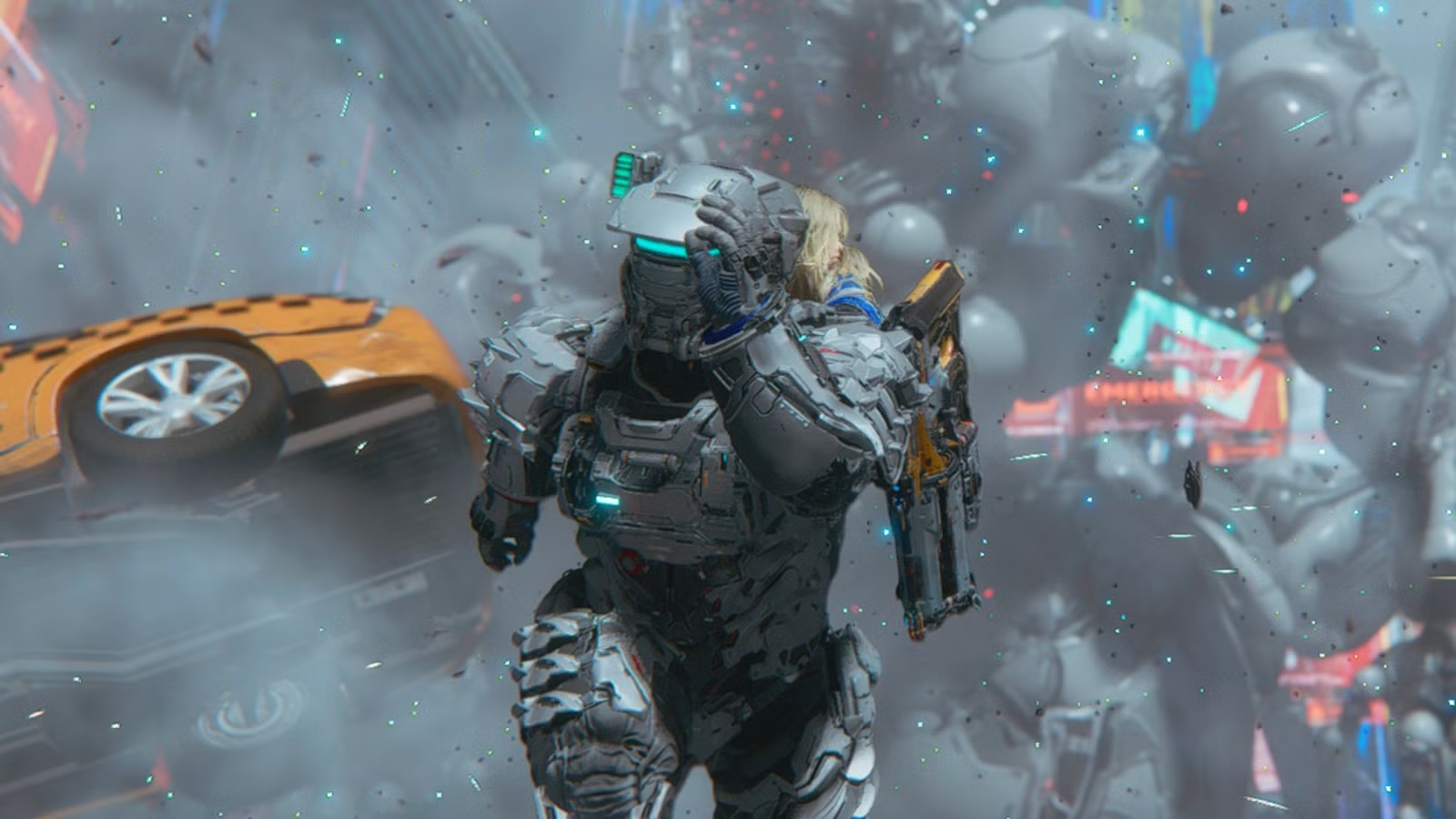
I got lost in Pragmata‘s New York. It was a little embarrassing, actually. I was in the shopping center, which is maze-like but not exactly huge, and entered a small area with three different exits. I wasn’t paying close attention at that point, having swapped to a different screen briefly, so I couldn’t remember which exit I had entered from. It was a dumb mistake Pragmata let me make, and I was thrilled.
Pragmata gives you a scanner that points out the general location of important objects, and you can even upgrade it later to show nearby collectibles, if you feel so inclined. I used it maybe twice — the first time to see how it worked and later to find a mod chest I just could not track down. The option to de-mystify the world and know where to go is welcome in situations like that, but even more welcome is that it’s just an option.

It’s annoying when games tell you precisely where to go and what to do; it defeats the point of playing. Why, I always wonder, would you bother giving me these painstakingly crafted worlds, just to put me on a pre-determined path that points out all the surprises? I’ll ask for help if I need it. Otherwise, please leave me alone. The emotional satisfaction you get from trying something of your own volition that results in something cool happening is exponentially larger than finding something after you get a hint or reminder.
Look at the rest of Not-New-York, for example. The path at the top of the shopping center splits in two ways. One leads you to an objective, but there’s another route that could lead to another objective, a new area, or a secret, or who knows what. What you actually get is the neat visual of walking along a bridge made of windows and some useful upgrades, but thanks to the vagueness of Pragmata‘s map, there’s no way to know that without investigating yourself. It turns the discovery into a mini-event, instead of just another thing to tick off your checklist.
Heck, even Pragmata‘s first zone gave me more freedom and satisfaction than most modern big-budget games. In the initial “unlock four things” challenge, I climbed somewhere I thought I wasn’t supposed to reach yet and fell very far back to the ground floor. Then, I started a combat encounter I didn’t realize would happen, found a new weapon, and eventually hacked one of the door locks. I realized later that it wasn’t that big of a deal, and I would’ve ended up there shortly had I just followed the path. But it felt cool, like a bit of sequence breaking, and it encouraged me to explore everywhere after that.

Pragmata‘s open-ended approach applies to combat as well. One of my lingering complaints about Ghost of Yōtei is how it gives you all these fantastically cool weapons and then only lets you use half of them in carefully prescribed scenarios. Pragmata isn’t like that. Yes, game, I see from the five charge piercer guns you left lying around that you’d like me to use a charge piercer in this fight. I will not. I wanna use my shotgun, jump into the air, slow down time while aiming, and do a dramatic little flashy finisher because it’s fun and because I can. Using certain weapons makes some fights easier, like the New York boss or the fights in the Terra Dome where you need to keep your distance from artificial lightning. But you’re never forced into a situation where you have to use a specific hacking node or gun. Every encounter is yours to handle as you see fit, even if that means making ill-advised choices and losing a fight.
Admittedly, Pragmata‘s hands-off approach to guidance works in part thanks to the small-ish map sizes. You’re less likely to get lost and probably won’t spend hours tracking down a collectible. (Unless, like me, you forget that fake walls are sometimes a thing in this game.) Maybe other, bigger games do need additional handholding options to ensure everyone has fun. But if other studios learn just one thing from Pragmata, I hope it’s the value of stepping back, of letting players make mistakes, do dumb things, and learn on their own.

Pragmata’s big launch is giving me hope for single-player games
Capcom’s quest for world domination continues