



The Trojan horse is one of those indelible images. It’s a tale that most of us are acquainted with, whether we studied it in school, saw it in a movie, read about it in books, or heard it mentioned in a song. In Greek mythology, the Trojan horse was a trick devised by Odysseus in the Trojan War, resulting in the end of a struggle that had dragged on for a decade. The giant wooden horse was presented as a peace offering to the Trojans and was dragged inside the city’s impregnable walls, only for Greek warriors to crawl out of it and destroy the city in one night.
Christopher Nolan’s The Odyssey is one of the year’s most ambitious movies. Based on Homer’s epic poem, one of the film’s key sequences features the Trojan Horse, an image that is revisited at various points in the film, gaining different meanings as Odysseus’ story develops. But Nolan’s initial depiction of the horse is particularly stunning, showing it as a massive structure towering and abandoned on the beach, about to be swept away by the sea. It’s a visual Nolan has been developing for the past 20 years, and its inspiration traces back to a surprising source.

Nolan’s cinematic journey with Homer began in 2004, when he was attached to direct Troy. (He later pivoted to Batman Begins, while Wolfgang Petersen jumped from a planned “Batman versus Superman” movie to take over Warner’s Iliad adaptation.)
“As part of that process I had to work out how I wanted to treat the Trojan Horse,” Nolan recently said in an interview with the TikTok channel Stepping Through Film. “I was very influenced by seeing The Planet of the Apes when I was a kid,” he continued. “We had the Statue of Liberty half destroyed. That idea of a fallen monument.”
It’s a fitting reference, with both films serving as great examples of taking a symbol and flipping its meaning.

The Statue of Liberty in The Planet of the Apes is one of the most iconic images in cinema, and one of science fiction’s greatest twists. Coming in at the end of the film, the appearance of the statue shifts our understanding of the story, revealing that the Planet of the Apes isn’t some far-flung alien world but a post-apocalyptic version of Earth. Like in The Odyssey, the moment is also set on a beach, following George Taylor’s (Charlton Heston) escape from the apes. As the statue slowly appears in the frame, the music swells, and the camera zooms in on his heartbroken face. Oh my God. I’m back. I’m home,” he says. “All this time.”
The reveal of the sunken Statue of Liberty becomes a symbol of humanity’s downfall and hubris. The Odyssey takes this symbolism further, pinning the blame not just on humans, but on its titular hero.
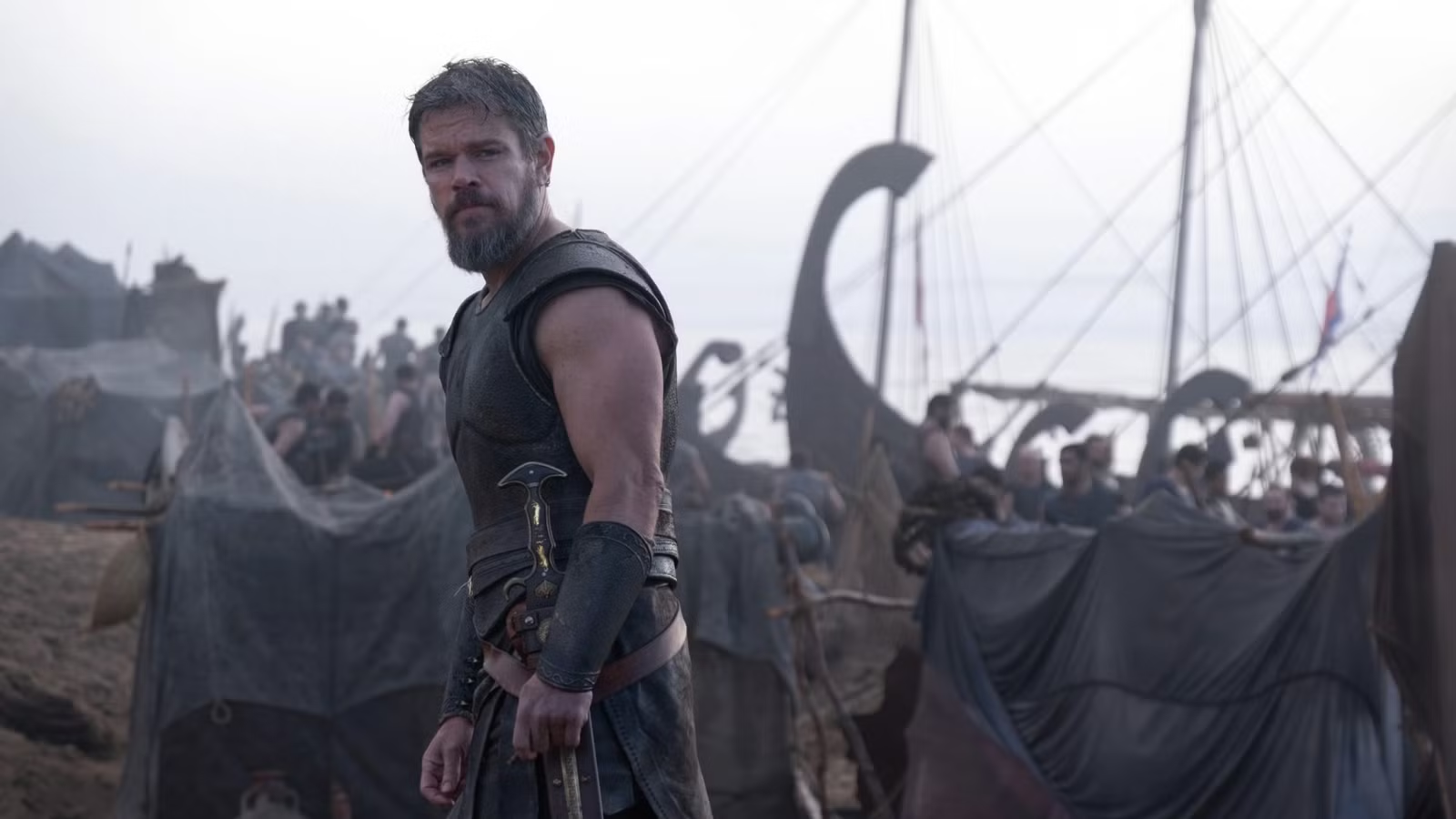
In The Odyssey, the tale of the Trojan horse is shared first by the bard Phemius (A$AP Rocky) and soon afterward in more detail by Menelaus (Jon Bernthal). Both tellings emphasize Odysseus’ (Matt Damon) strengths as a brilliant strategist and the labor and glory of penetrating the fortress’ walls, an understanding that most translations and adaptations of The Odyssey embrace. Nolan takes some creative liberties during the film’s final act, when the moment is revisited as Odysseus shares the story with Queen Penelope (Anne Hathaway). Through his eyes, what was heroic is now tragic. Odysseus is traumatized by the pillaging of the city and the killing of innocents. The sacking of Troy is ultimately the reason why he hasn’t been able to return home.

The Trojan Horse becomes the embodiment of the violation of Zeus’ Law, a code of conduct the film introduces early on, centered on providing hospitality to strangers. It’s an adaptation of one of Greek mythology’s key ideas: Xenia, the responsibility of treating visitors with kindness and respect. For Odysseus, tricking the Trojans with a fake peace offering broke that rule, turning their own hospitality against them. With Zeus’ Law rendered obsolete, the Greek world becomes a lawless place, one where mysterious sea people sack islands and entitled suitors take over Odysseus’ home in Ithaca.
Or as Charlton Heston might put it: “We finally really did it. You Maniacs! You blew it up! Ah, damn you! God damn you all to hell!”
Nolan’s Trojan Horse brings the Greek texts out of the context of gods and monsters and into a world filled with complicated humans we can empathize with, turning a symbol of victory into an emblem of civilizational collapse. To top it all off, he delivered a cinematic image that has been 20 years in the making, and that more than stands up to the historic shot that so inspired him as a kid.
The Odyssey is in theaters now.