




Every sequel faces the same impossible challenge. Audiences want more of what they loved the first time, but they also want something new. Lean too heavily on familiarity and the sequel feels like a remake. Change too much and it risks feeling disconnected from the original. Hollywood has spent decades trying to solve that puzzle, but few franchises have found the balance better than one that began with a monster stalking seven victims through the corridors of a spaceship, and then burst out of Hollywood’s chest to sprint off in a completely different direction.
Four decades ago, Aliens solved the sequel problem by refusing to become another Alien. Rather than recreating the haunted-house horror of Ridley Scott’s 1979 original, James Cameron transformed the franchise into a military action thriller while preserving the tension, corporate greed, and overwhelming sense that humanity had stumbled across something it could never control. More importantly, that shift didn’t merely produce a great sequel. It expanded what an Alien movie could be and offered a new blueprint for sequels in the process.
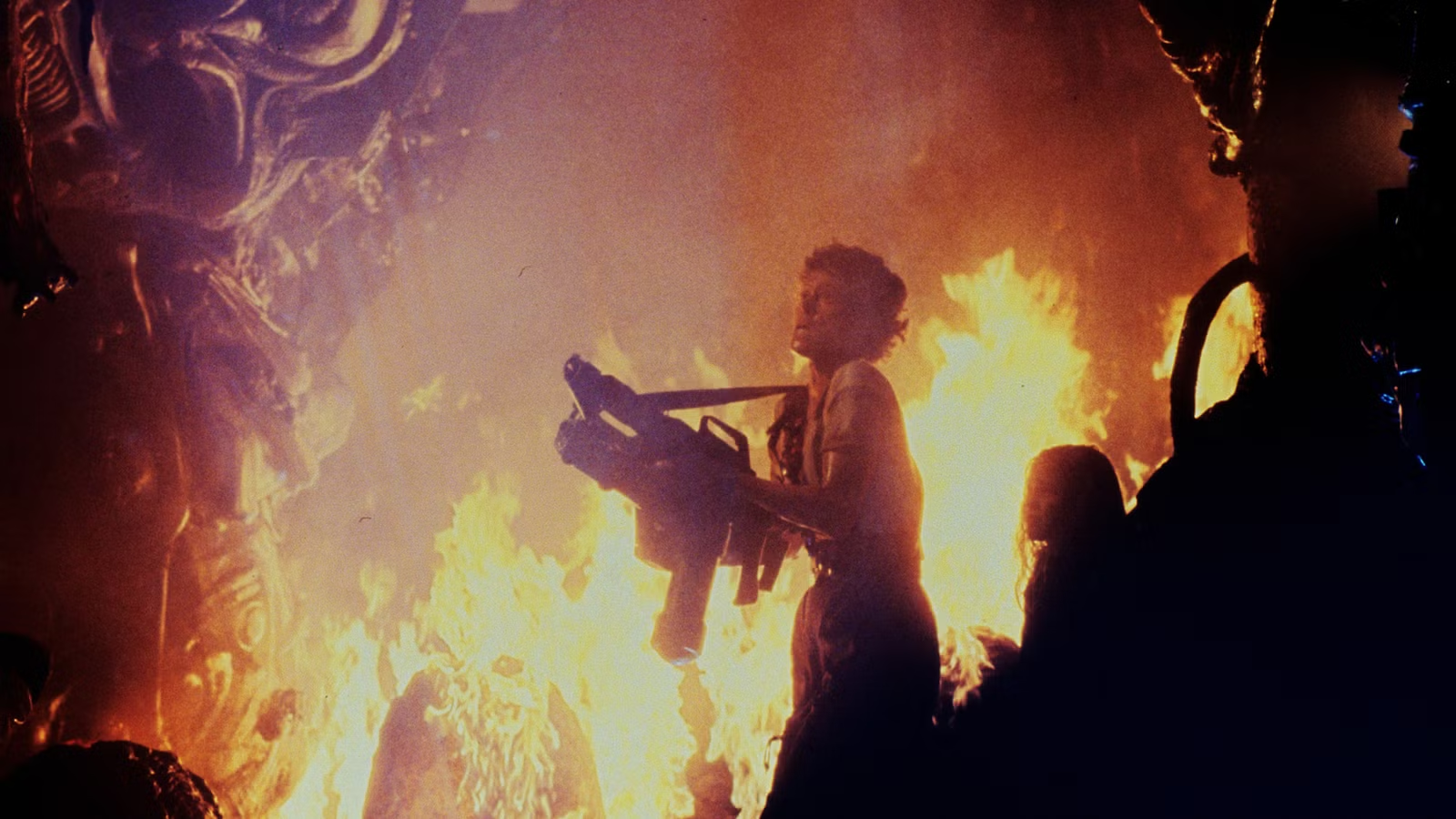
Alien follows a small crew trying to survive a creature they barely understand. Aliens sends the original’s sole survivor, Ripley (Sigourney Weaver), back to the scene of the crime (the seemingly barren moon known as LV-426) with a squad of heavily armed Colonial Marines who believe they understand exactly what they’re facing. They have pulse rifles, body armor, an armored personnel carrier, and enough confidence to last until roughly five minutes after they enter the colony.
The shift from horror to action changes the scale of the conflict, but it doesn’t abandon what made Alien work. Cameron understood that making a sequel bigger didn’t have to mean repeating the first movie with more xenomorphs. The creatures remain terrifying because he never lets the Marines’ advanced weapons make them feel manageable. The Marines arrive like the heroes of another movie, swaggering through the abandoned terraforming facility Hadley’s Hope and treating the mission as routine. Then the creatures tear through them with brutal efficiency. The sequel gives the soldiers greater firepower than the crew of the Nostromo ever had, only to demonstrate how little that firepower ultimately matters.

Ripley remains the emotional connection between the two films. In Alien, she survives because she respects the danger posed by the xenomorph before anyone else does. In Aliens, nobody listens to her until it’s far too late (because apparently surviving a murderous extraterrestrial still isn’t enough to make a company take your workplace concerns seriously). For Ripley, returning to LV-426 isn’t just another mission, it’s confronting the place that destroyed her old life — all while trying to save Newt (Carrie Henn), a child who has experienced the same kind of loss.
The military setting also gives Cameron room to expand the Alien universe without slowing the story down. The Colonial Marines and Hadley’s Hope reveal new corners of that world, but the boldest addition is the Alien queen. Cameron introduces her without stopping for a lengthy biology lesson. Ripley discovers the towering creature surrounded by eggs, and the audience immediately understands what they’re looking at. Cameron shows us rather than tells us, making the species feel larger and more complex while preserving its mystery. These additions don’t feel designed to advertise future installments. They exist because Aliens needs them.

Cameron would solve the sequel problem again five years later with Terminator 2: Judgment Day, but through a nearly opposite philosophy. T2 largely remains an action thriller about machines traveling through time to alter humanity’s future. Cameron changes the roles — turning Arnold Schwarzenegger’s Terminator from killer to protector — and dramatically raises the stakes, but he stays within the storytelling framework established by the original. Rather than reinventing the formula, he perfects it.
That’s what makes Aliens the bolder blueprint. Where Terminator 2 refines an already successful formula, Aliens demonstrates the power of reinvention. It proves that audiences don’t need more of the same. They need a new perspective on a world they already love. That’s still one of the smartest lessons any sequel has ever taught Hollywood.

Four decades later, studios still spend enormous amounts of money trying to make sequels feel bigger. Usually that means more characters, more mythology, more callbacks, and more explanations. Aliens understood that a fictional universe doesn’t become larger simply because audiences know more about it. It becomes larger when filmmakers prove it can contain stories nobody expected.
The greatest sequels don’t just revisit a world, they reveal new possibilities within it. And Aliens remains the gold standard.