





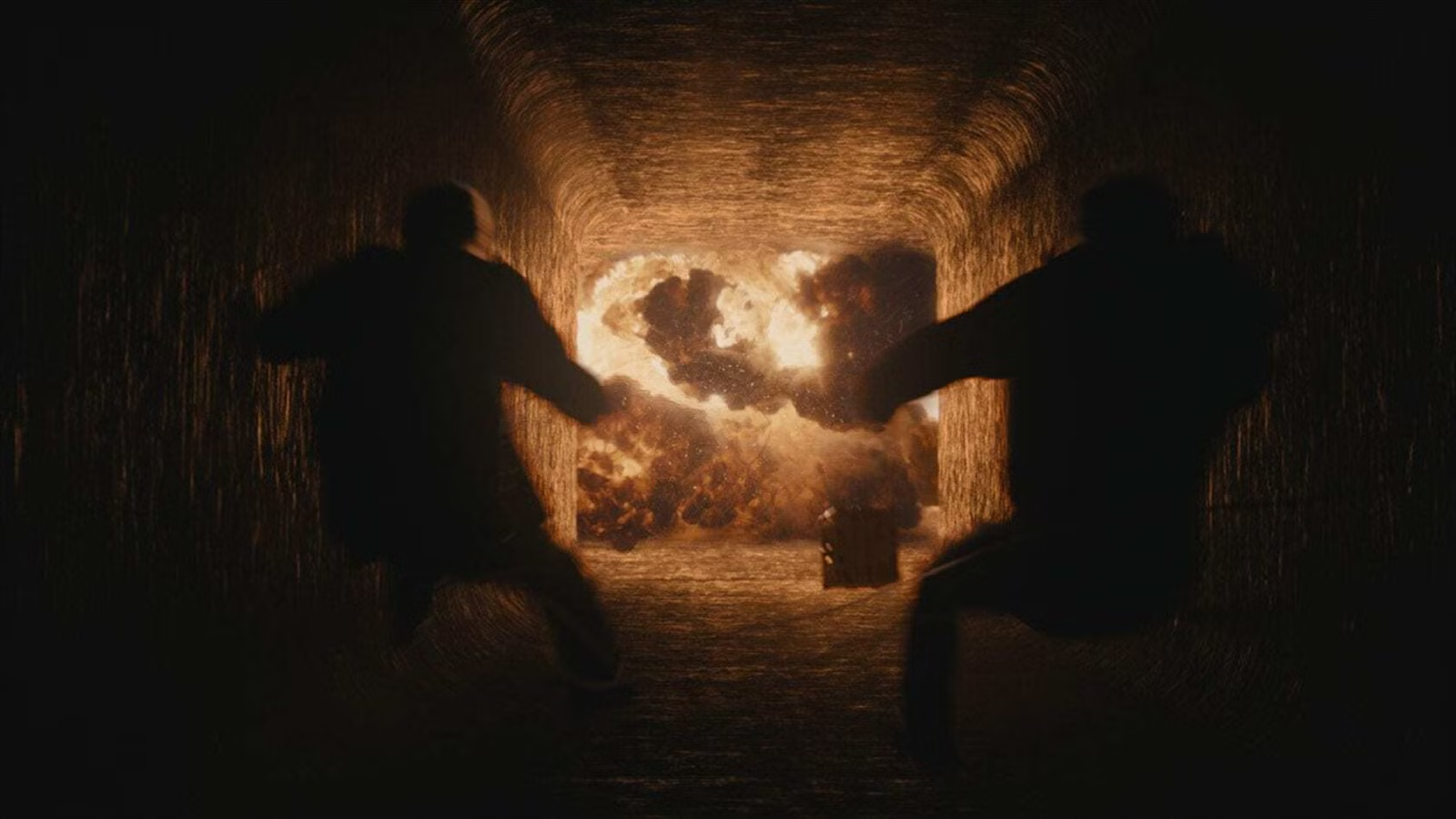
Alien invasion stories have fascinated us since H.G. Wells published The War of the Worlds (1898). The acclaimed sci-fi novel has inspired countless adaptations, including Steven Spielberg’s 2005 version starring Tom Cruise. While Wells’ story was the blueprint for this trope, genre films like They Live (1988), Signs (2002), and Attack the Block (2011) have taken varied approaches to the subject of humanity dealing with the otherworldly.
The unsettling overtones of an alien invasion have also been turned on their head in movies like Spielberg’s E.T. the Extra-Terrestrial (1982) and Robert Zemeckis’ Contact (1997), where the nature of first contact is benevolent rather than jarring.
Denis Villeneuve (Dune, Prisoners) tackles a similar premise in Arrival (2016), which landed on Pluto TV on June 1. Equal parts ambitious and emotionally devastating, Arrival doesn’t dwell on the spectacle traditionally associated with the alien invasion genre, instead opting for a philosophical and mind-bending experience that has a surprising amount of emotional sincerity. When 12 alien spacecraft suddenly appear at locations around the Earth, the entire world panics, and various nations quickly mobilize resources to figure out the next steps.
Instead of plunging the narrative into action-packed chaos, Arrival dwells on the escalating anxieties caused by the mysterious beings, dubbed heptapods, who are eager to communicate and seem to pose no immediate threat. While various nations struggle to come up with an effective means of communication, linguist Louise Banks (Amy Adams) and physicist Ian Donnelly (Jeremy Renner) conduct their own study on a craft stationed above Montana.
What sets Arrival apart from run-of-the-mill genre fare is its intelligent and empathetic handling of a time-tested trope. The communication barrier between humans and heptapods can only be breached by someone willing to find common ground, which can only be found by patiently deciphering their puzzling ink-based language. This also involves the cultivation of mutual trust. This is where Louise comes in, as she speaks at least eight languages and has dedicated her life to dissecting the subtle nuances of communication.

Once Louise and Ian edge closer to understanding the heptapods’ answer to “Why are you here?,” the relative nature of language (and how it defines our reality) becomes clear. Various nations interpret the heptapods’ answer as a violent threat, breaking off contact out of fear. As the heptapods’ statement can be loosely translated to their desire to “use weapon” or “offer weapon,” most of humanity perceives it as an ominous warning.
Louise, however, argues that “weapon” might just be a misinterpretation, and some of the actual meaning has been lost in translation. She even suggests what they’re offering could be something far less dangerous, like a “tool.” As this particular mystery deepens, Louise immerses herself in the quiet complexity of meaningful communication and the patience necessary to arrive at the truth.

Arrival explores why Louise’s compassion-first approach towards the Montana heptapods is the only viable way to change the trajectory of human civilization. Trust can be fragile even between people who speak the same tongue, which is what makes Louise’s curiosity and vulnerability feel like a huge leap of faith. Villeneuve sprinkles clever clues in the film’s visual fabric long before Arrival delivers a shocking twist, which only serves to make a second viewing that much more compelling.
The merits of Arrival, however, don’t hinge on this twist reveal, which recontextualizes the entire narrative while it heads into the final act. The film has a lot to say about how even the most well-meaning of intentions can quickly devolve into violence if we let fear dictate our decisions. Language shapes how we think, but Villeneuve insists that even the most rigid worldviews can be reshaped with the power of earnest communication. As the future of humanity unravels, Arrival dives deeper into the themes of fate, grief, and faith, and how these universal sentiments end up defining who we are.
Steven Spielberg’s new sci-fi movie probes a ‘question of faith’ about aliens and government lies
Screenwriter David Koepp uncovers a few secrets from the upcoming sci-fi m ovie
If you’re partial towards taut sci-fi stories that embrace cerebral storytelling and thematic richness, Arrival might be right up your alley. It is the kind of alien invasion tale that urges us to rethink the ways we communicate without letting our collective anxieties take over.
Arrival is streaming on Pluto TV.