



Unless you were sleeping under a rock, we’re almost certain you’ve heard of Sony Animation and Netflix’s animated masterpiece, KPop Demon Hunters. Released one year ago on June 20, 2025, the film quickly became an overnight sensation, spawning endless fanfic, TikTok dance videos, a place in the Criterion Collection, and even a McDonald’s collaboration. But KPop Demon Hunters‘ achievements don’t stop there: along with becoming the most-watched Netflix Original movie ever, its hit song “Golden” has been performed across multiple talk shows and on Saturday Night Live (as part of a sketch featuring Bad Bunny, but still). There’s even a KPop Demon Hunters world tour planned. But the success of KPDH goes far deeper than accolades and merch — even if that Derpy Tiger Lego set looks amazing.
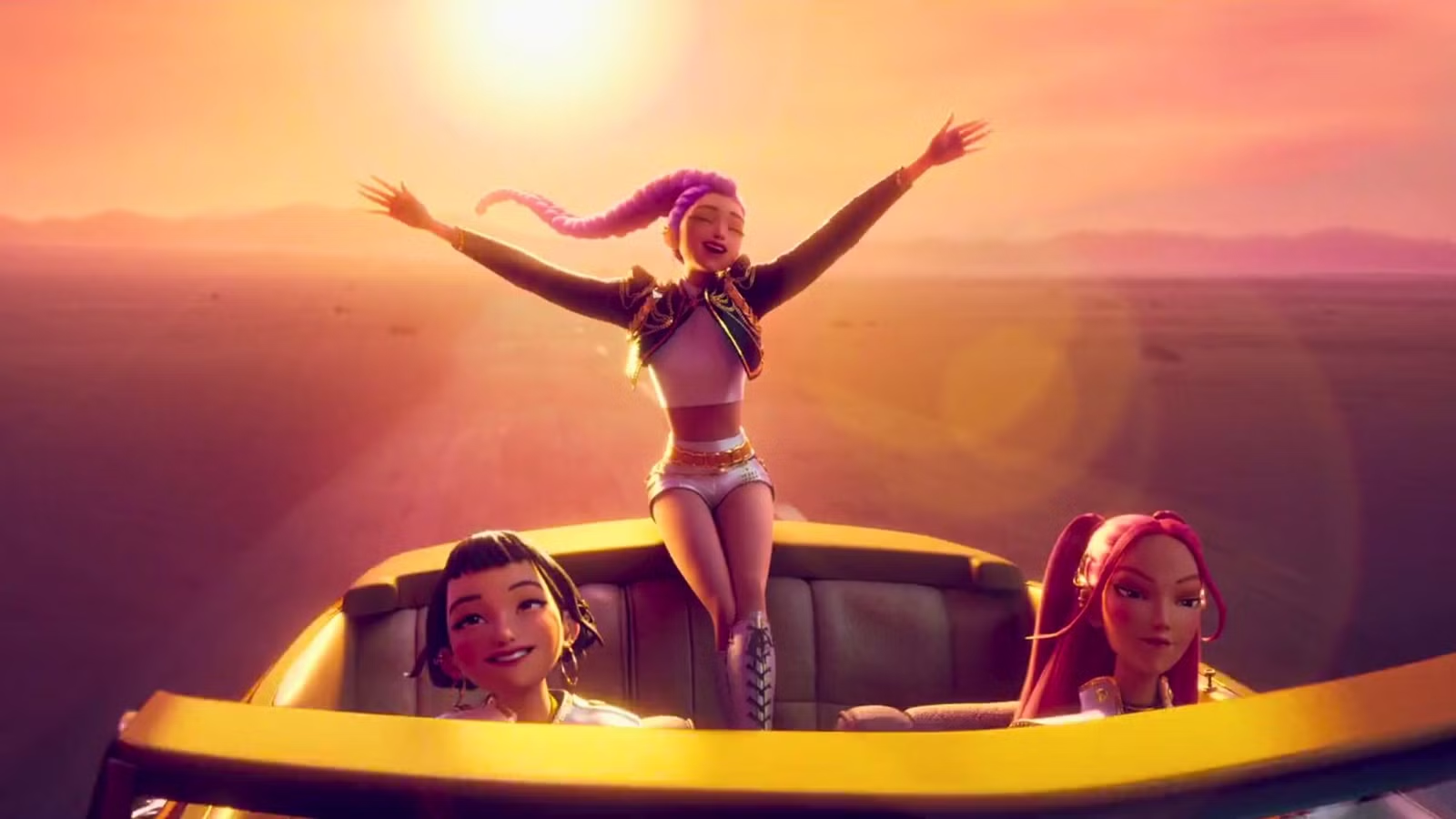
KPop Demon Hunters follows girlband Huntr/x, made up of Rumi, Mira, and Zoey. The trio are K-pop superstars by day and demon slayers by night, tasked with sealing the gateway between humanity and demons by creating a magical shield known as the Honmoon. On the surface, it may be hard to imagine what a movie that seems targeted at tween girls has to offer other audiences. Look a little deeper, and the answer becomes obvious. The power of KPop Demon Hunters lies not in its many successes but in an overarching message everyone could relate to.
Creators Maggie Kang, Chris Appelhans, and Michelle L.M. Wong’s decision to move KPop Demon Hunters away from the more violent, adult-oriented concept and toward a four-quadrant film proved to be the best choice for the project. Instead of gore and guts, the movie tackled something that all of us — from young children to adults 50+ and over — could feel kinship with: feeling different from others and not being able to be who we really want to be.
KPop Demon Hunters’ choice to highlight Rumi as the protagonist, someone who feels ashamed of her identity and hides her true self out of fear of rejection, makes sense. As a demon hunter, Rumi has been brought up believing demons are evil, so her hidden demonic heritage only further fuels her humiliation. Heritage is a vital aspect of KPop Demon Hunters, and creator Maggie Kang paid special attention to its exploration in the film’s creation. Rumi’s shame is a powerful metaphor of widespread social anxieties — from self-acceptance to sexual repression — that many, across multiple generations, experience.
However, it would be a mistake to think that shame itself brought fans together. As Rumi discovers at the end of the film, by accepting her identity as part-demon and thus allowing her friends and loved ones to see who she truly is, she finds both the power to repel the demons from the world and, most importantly, joy. It’s a powerful message that attracts all types of audiences, especially when delivered through incredibly catchy K-pop songs.

And we do mean all types. While KPop Demon Hunters no doubt has wormed its way into the hearts of children and tweens around the globe, that hasn’t stopped adults from enjoying the animation sensation either. From cosplay groups to tabletop creators and vocal coaches to heavy metal musicians, KPop Demon Hunters spoke to all age groups and made the world happier for it. It has undoubtedly become a cornerstone of pop culture.
KPop Demon Hunters also helped bridge the gap between Western audiences and Korean culture. While the popularity of K-pop has never been in doubt, thanks to mega-bands like BTS and Blackpink, Kang, Appelhans, and Wong’s love for the culture is so intimately woven into the narrative beats of KPop Demon Hunters. Audiences can’t help but be drawn to it and want to know more.
It’s the audience’s love for the film and the mythology and traditions behind it that was the heart of what Kang, in particular, wanted to achieve with KPop Demon Hunters. Speaking to ELLE, Kang recalled how her 2nd-grade teacher couldn’t find Korea on a map; a moment in her life that galvanized her completely. “I always thought that I would want to do something that would showcase Korean culture to the world.”

The result speaks for itself. The world of KPop Demon Hunters blends traditional Korean mythology with the modern day, while paying special attention to the K-pop industry and fan culture. Even a year later, there is still a relentless amount of KPop Demon Hunters content across social media — fanart, fanfiction, non-stop collaborations, you name it — that shows people remain inspired by Kang, Appelhans and Wong’s vision.
As Polygon’s resident KPop Demon Hunters writer, I’m certainly not immune either. KPop Demon Hunters remains a steady part of my life, with a soundtrack I listen to daily and a strange pride that a film aimed at young girls and tweens (a demographic so often ridiculed and underestimated) has spoken so loudly to people across the globe. The idea that anything primarily made for women — whether literature or life-changing research — simply isn’t worth caring about has often prevailed throughout history. KPop Demon Hunters won’t change that way of thinking; no single movie has that much significance. But it has opened people’s eyes to new perspectives they hadn’t considered before — and that’s just as powerful.
KPop Demon Hunters is available to stream now on Netflix.