



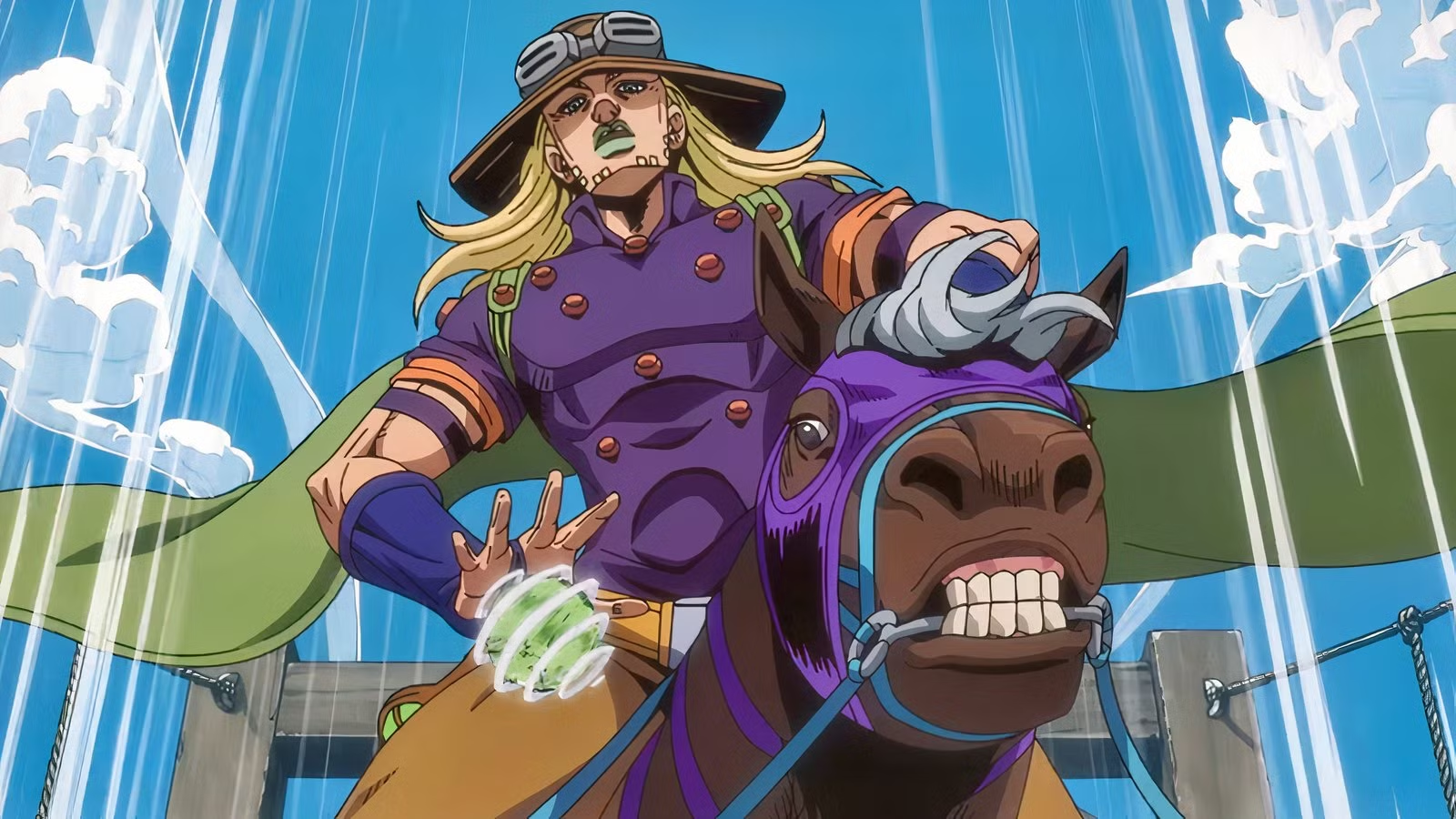
On March 19, Netflix released the long-awaited two-part premiere of Hirohiko Araki’s JoJo’s Bizarre Adventure: Steel Ball Run. This first double episode laid the foundation for the titular horse racing competition, helping build exciting momentum for the next batch of races to come. David Production, the animation studio that previously brought the first six parts of JoJo to life, has returned to inject kinetic visual flair into the stunning world of Steel Ball Run.
It’s only natural for such a successful premiere to be followed up by a weekly release schedule; instead, fans were left utterly dejected once a new episode of Steel Ball Run didn’t drop the following week. It soon became clear that, despite the success of the premiere, there were no new episodes of the show ready to air.
By mid-March, Netflix’s social accounts were flooded with comments and questions about the release schedule. Memes of protagonist Johnny Joestar sporting Sharingan eyes became inescapable, along with tongue-in-cheek demands for an official announcement. Even A24 joined in on the fun at one point, fanning the flames of an (understandably) aggravated fandom that sought to manage expectations with an estimated air date. This backlash got out of hand real quick, forcing Netflix to release a statement on X that is too vague for its own good:
Although we do have a “fall 2026” framework in place, it does little to soften the blow of Netflix fumbling the release of such a beloved anime title. Hirohiko Araki’s Steel Ball Run is a franchise game-changer for several reasons. It’s set in a different continuity from what came before, and it freely indulges in Spaghetti Western tropes in its 1890s setting, enriching existing lore by reworking its context. The brilliant anime premiere reinforces these expectations, as David Production ticks all the requisite boxes to make this sprawling saga work. A consistent weekly release, minus the humongous gap after the premiere, would’ve preserved the intended cadence of Araki’s story, which speeds up and slows down as per a rhythm meant to sustain audience excitement.
However, Netflix never advertised the double-premiere as a special preview that wouldn’t be immediately followed by weekly episodes. Even when adaptations are split into cours (batches of episodes with breaks in between), these schedules are announced in advance, and a two-episode premiere is rarely classified as a cour, unless it’s explicitly advertised as such. Although Netflix has retroactively named the premiere the 1st Stage in the above-mentioned statement, they haven’t specified the number of episodes that will constitute the 2nd Stage. “This release schedule is part of our original plan and reflects the wishes of the production committee,” Netflix claims. If this truly is the case, the streaming service’s lack of transparency is to blame here, along with the absence of a concrete release timeline.

This isn’t the first time Netflix has been embroiled in controversy in connection with a JoJo title. After the streaming giant got the exclusive rights for Stone Ocean (Part 7), they opted for a disastrous batch release schedule that genuinely hampered the viewing experience compared to the weekly release that fans were clamoring for. Although a binge model isn’t suited to such an engrossing tale, the three batch releases (12, 12, and 14 episodes) felt arbitrary and inconsistent over the course of 2021 and 2022. As the release wasn’t paced around big reveals or natural pauses in the story, the hype surrounding Stone Ocean took a major hit when compounded by the lack of proper marketing. To say that it is disappointing to see history repeat itself is an understatement.
While the Steel Ball Run premiere adapted the first two volumes from Araki’s manga at breakneck pace, we can expect the 2nd Stage to tackle the aftermath of the first race and provide further insight into the mysterious Gyro Zeppeli. In the premiere, we saw Gyro with two green-hued steel balls strapped to his holster belt, which he uses to achieve a state of near-perfect rotation (called Spin) for various purposes. Pertinent questions about these supernatural steel balls are raised in volume 3 of the manga in the midst of a chilling discovery on the already-trodden racetrack.

Although there’s no way to anticipate when Stage 2 will start airing, we can hope that a weekly schedule for the next cour of Steel Ball Run will help streamline the experience the way Araki intended. After all, Steel Ball Run’s deceptively straightforward premise conceals a frightening conspiracy that peels back the themes of unchecked greed and the pitfalls of toxic nationalism. It pulls us into its Western-themed world with promises of exuberant public tournaments, but the meat of the story lies in the complex personal ambitions that make every character tick.
Steel Ball Run is a story meant to be consumed in small, satisfying bites every week, with carefully planned breaks that are only meant to build up an appetite for the unforgettable feast ahead. If Netflix wishes to avoid a repeat of what transpired with Stone Ocean, they need to start airing Steel Ball Run with the care and consideration it deserves.
JoJo: Steel Ball Run’s two-part premiere can be streamed on Netflix.