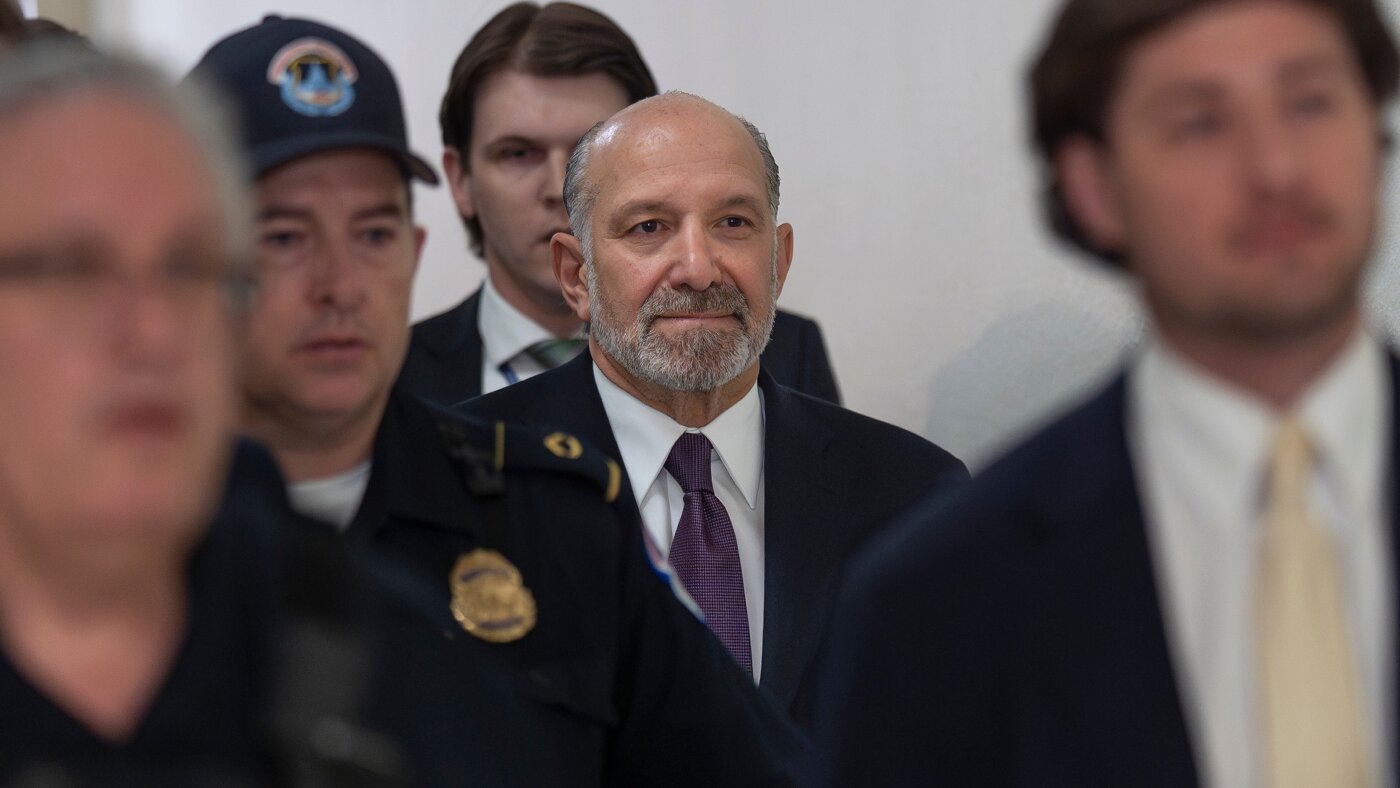




Vice President JD Vance said the U.S. and Iran did not reach an agreement to end the war after meeting on Saturday. Control over the Strait of Hormuz remains a flash point in the war.
AYESHA RASCOE, HOST:
The U.S. and Iran have failed to reach an agreement to end the war. JD Vance led a U.S. delegation to Pakistan to negotiate with senior Iranian officials yesterday. Here’s what he said after the meeting ended.
(SOUNDBITE OF ARCHIVED RECORDING)
JD VANCE: We go back to the United States, having not come to an agreement, we’ve made very clear what our red lines are, what things we’re willing to accommodate them on and what things we’re not willing to accommodate them on.
RASCOE: Vance reiterated that the U.S. would not allow Iran to acquire a nuclear weapon. Joining us now is senior political correspondent Mara Liasson. Good morning, Mara.
MARA LIASSON, BYLINE: Good morning.
RASCOE: So Vance said the meeting lasted 21 hours, but he came back with nothing. What happened?
LIASSON: Yesterday, Vance was joined by special envoy Steve Witkoff, President Trump’s son-in-law, Jared Kushner. They met with the Iranian delegation, made up of the foreign minister and the speaker of Iran’s parliament. And in that sense, the meeting was historic. It was the first time that senior officials of this high level from both sides have met face-to-face since the Iranian Revolution of 1979, but neither side was willing to compromise. But even though Vance said no agreement was reached, and the Iranians, he said, chose not to accept our terms, it seemed as though he was keeping the door open. He said he left Pakistan with, quote, “a very simple proposal. We’ll see if the Iranians accept it.”
For his part, Donald Trump said, quote, “whether we make a deal or not makes no difference to me. And the reason is because we’ve won.” So I think the bottom line remains the same. The United States has accomplished its military goals. It’s decimated Iran’s navy, set back its ballistic missile program, but it hasn’t accomplished its political goals. There’s no regime change. Iran still has nuclear-enriched material. And it has not agreed to give up its aspirations to a nuclear weapon, and it still controls the Strait of Hormuz.
RASCOE: Speaking of the Strait of Hormuz, it’s clearly a flashpoint in the war. This is what Trump said about it on Friday.
(SOUNDBITE OF ARCHIVED RECORDING)
PRESIDENT DONALD TRUMP: They’re militarily defeated, and now we’re going to open up the Gulf with them – with or without them. But that’ll be open. We’re going to be – or the strait, as they call it. And I think it’s going to go pretty quickly. And if it doesn’t, we’ll be able to finish it off one way or the other.
RASCOE: Well, Trump seems to be saying that the U.S. has some role in, you know, to play in opening up the strait, but is that the case?
LIASSON: Well, he’s been saying that for a while. He said the strait would open up naturally. But right now, the Strait of Hormuz is controlled by Iran. It’s their biggest point of leverage. As Trump would say, they hold the cards when it comes to the Strait of Hormuz. It’s a choke point for global oil markets, so Iran can cause prices to rise or fall. They’ve been charging a toll for ships going through the Gulf. Donald Trump has said that’s unacceptable, but he’s also floated the idea of the U.S. and Iran somehow running the strait together and charging ships to pass through. That would violate a long-standing principle of freedom of navigation that, at least until now, the U.S. has upheld. Maritime law says a natural waterway like the strait should be free and clear for passage. You don’t have to pay for it, the way ships might have to pay to go through the Suez Canal or the Panama Canal. But the big question is if Iran continues to control the strait, even if they are allowing some ships to go through, that would be a big defeat for the United States because before the war, they were not doing this.
RASCOE: So how does all this get resolved?
LIASSON: That’s not clear. I suppose negotiations could restart. The two sides are still far apart, but that’s one resolution. Donald Trump, as he seems to be threatening and hinting in those bites you just played, he could send in ground troops. He could send in the U.S. military to forcibly open the strait, or, as Defense Secretary Pete Hegseth has said, if Iran doesn’t turn over its enriched uranium, the U.S. will go in and get it. That also would involve ground troops, which could be a red line politically for a lot of voters in the United States. It also could be very risky. Or Donald Trump could declare victory and leave without his major political goals accomplished, with Iran still holding nuclear-enriched material or controlling the strait. And that’s – right now, it’s really unclear what happens.
RASCOE: So Trump had a closed-door meeting with the secretary general of NATO on Wednesday. And obviously, he had some more harsh words for the organization. On Truth Social, he said, quote, “NATO wasn’t there when we needed them, and they won’t be there if we need them again.” He’s obviously still very mad.
LIASSON: Yes, and the implication is – what he’s been threatening is that we wouldn’t be there for NATO. The beating heart of NATO is Article 5, which says an attack on one is an attack on all, and Donald Trump has called that into question, and that’s a big problem for Europe and a gift to Vladimir Putin.
RASCOE: That’s NPR senior political correspondent Mara Liasson. Mara, thank you so much.
LIASSON: You’re welcome.
Copyright © 2026 NPR. All rights reserved. Visit our website terms of use and permissions pages at www.npr.org for further information.
Accuracy and availability of NPR transcripts may vary. Transcript text may be revised to correct errors or match updates to audio. Audio on npr.org may be edited after its original broadcast or publication. The authoritative record of NPR’s programming is the audio record.