



Fictional characters aren’t supposed to stay the same forever. Audiences expect them to grow, mature, and evolve over time. But the longer a character survives, the harder it becomes to change them without losing the qualities that made people memorable in the first place.
Since his comic book debut in 1962, Peter Parker has been bitten by a radioactive spider, gained incredible powers, and spent decades protecting New York City. Like every long-running Marvel Comics character, he’s grown over the years. But Spider-Man has never been defined by his abilities. He’s defined by everything he loses along the way. Spider-Man is at his best when life refuses to give Peter Parker a break because, in so many ways, his life just kind of sucks.
Peter is almost always paying for his heroism. He loses jobs because he’s late. Relationships fall apart because he can’t tell the truth. Rent is always overdue. There are examples of this in every version of Spider-Man. In Spider-Man 2, he gets fired from delivering pizzas, disappoints Mary Jane (Kirsten Dunst), watches his friend Harry Osborn (James Franco) drift away, and struggles simply to keep his life together. In Spider-Man: No Way Home, saving the multiverse costs him Aunt May (Marisa Tomei), his best friend Ned (Jacob Batalon), and MJ (Zendaya), the woman he loves.

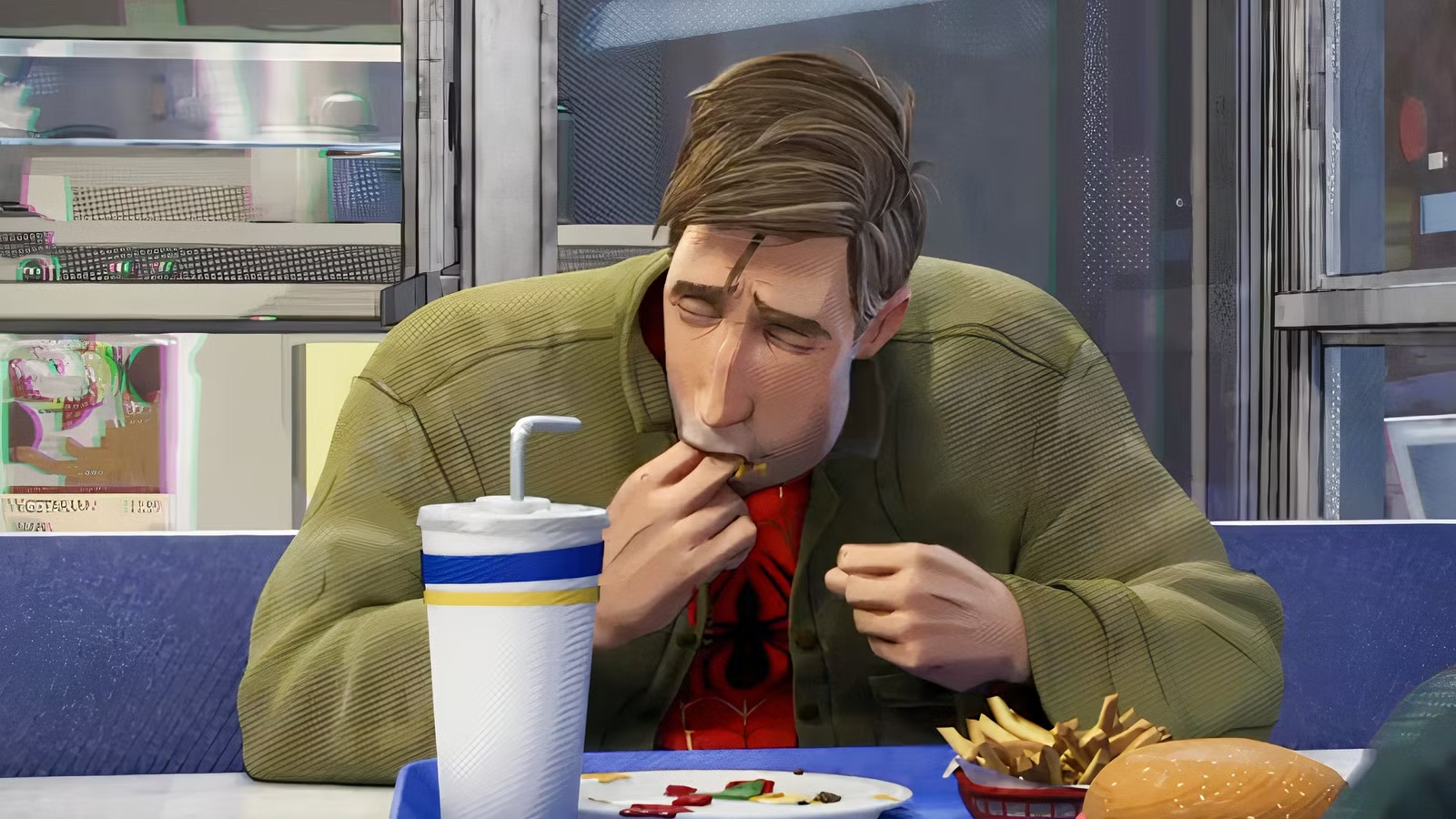
The pattern continues across every version of Spider-Man. Comic book fans even have a name for it: Parker Luck. In The Amazing Spider-Man 2, Peter (Andrew Garfield) can’t save Gwen Stacy (Emma Stone), a loss that still shapes him when he returns in Spider-Man: No Way Home. The animated and video game versions aren’t spared either. Peter B. Parker (Jake Johnson) begins Spider-Man: Into the Spider-Verse divorced, out of shape, and questioning nearly every decision he’s made, while Insomniac’s Spider-Man games constantly pile new personal sacrifices onto Peter’s shoulders. No matter the medium, Parker Luck always seems to find him.
The original Spider-Man film from 2002 sets this tone from the beginning. Peter’s (Tobey Maguire) new abilities finally allow him to stop being the kid who gets pushed around, but they don’t make him a hero. That only happens after he selfishly lets a thief escape and later discovers the same man who murdered his Uncle Ben (Cliff Robertson). “With great power comes great responsibility,” is the advice from Uncle Ben that haunts Peter. His death is the defining moment of Peter Parker’s life. From that moment on, setbacks become a constant part of his existence, but they never stop him from doing the right thing.

Most superheroes eventually see their lives improve in some way. Tony Stark becomes one of the most celebrated heroes on the planet. Captain America eventually gets his dance with Peggy Carter. Thor earns the throne of Asgard. Peter Parker rarely gets that kind of payoff. Just when his life seems like it’s finally turning around, another painful sacrifice reminds him that being Spider-Man doesn’t exempt him from being Peter Parker.
Amazingly, Peter doesn’t respond to all that misfortune by becoming darker or more cynical (except for that brief emo detour in Spider-Man 3). Peter responds to stress by cracking jokes, but Spider-Man’s quips aren’t a sign of confidence. They’re a coping mechanism. They buy time, calm his nerves, and throw his enemies off balance. Underneath the mask is still the awkward kid trying to convince himself everything is going to be okay. His life is constantly in shambles, yet he’s resilient enough to literally laugh in the face of danger.
Peter Parker’s misfortune isn’t a flaw in the character, however. It’s a storytelling necessity. Take away the awkwardness, the heartbreak, and the constant feeling that life is pretty unfair, and you’re left with a much less interesting Spider-Man.

It’s worth asking what Spider-Man looks like without all the struggle. Imagine a Peter Parker whose career is flourishing, whose marriage to Mary Jane is solid, whose friendships are “normal,” and whose victories rarely come with consequences. He’d almost certainly be happier. But would he still be Spider-Man? Probably not.
That’s also what makes Spider-Man Marvel’s hardest character to adapt. Every writer eventually runs into the same problem. Audiences want Peter Parker to mature, find happiness, and build lasting relationships. But if he becomes too successful, too confident, or too settled, he stops feeling like Spider-Man. Every adaptation ends up searching for the same sweet spot: letting Peter evolve while making sure life never stops testing him.
The best Spider-Man stories understand the trick isn’t choosing between growth and familiarity. It’s allowing Peter Parker to still be a compelling character without ever smoothing away the rough edges that made audiences fall in love with him in the first place. Spider-Man usually wins. Peter Parker rarely does.