




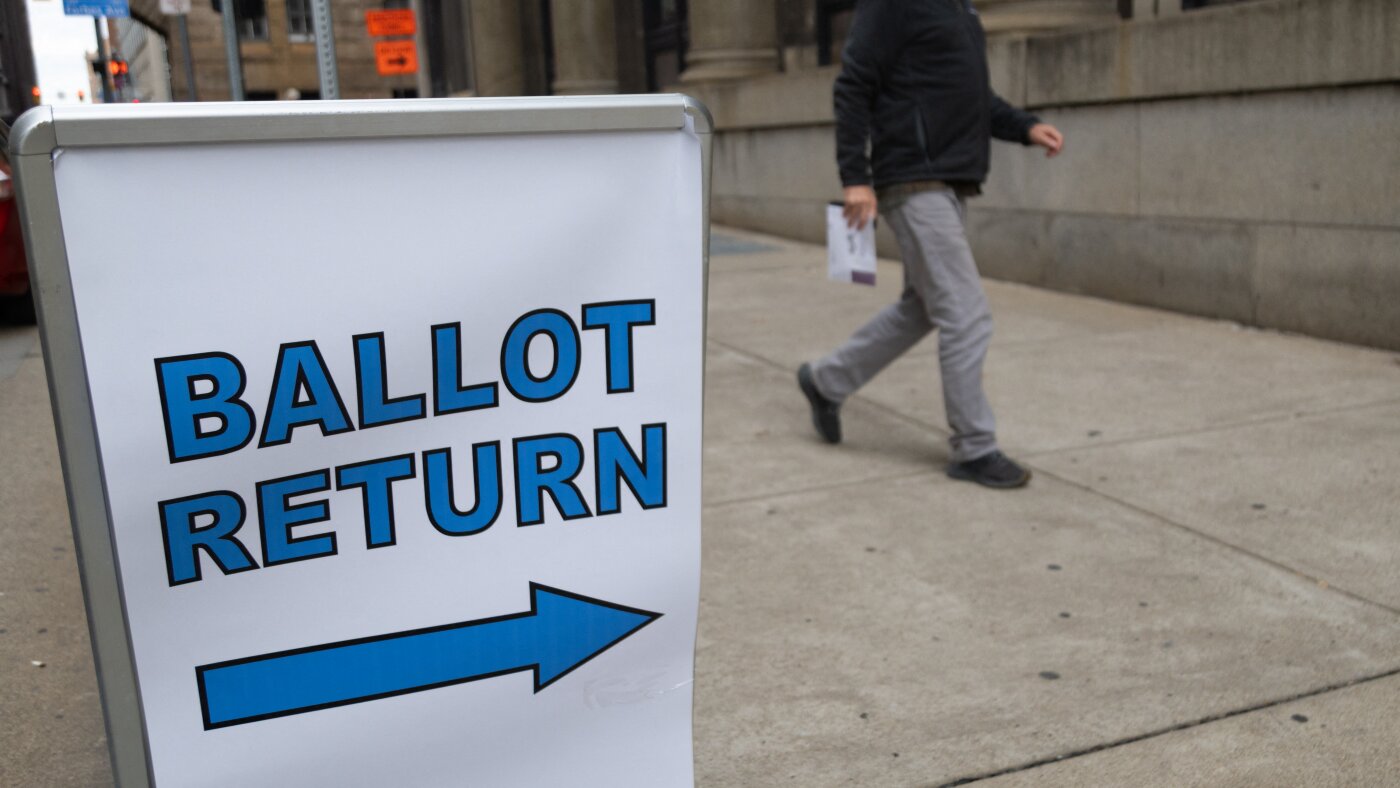

Voters drop off their mail-in ballots in Pittsburgh, Pa., on Nov. 4, 2024.
Rebecca Droke/AFP via Getty Images
hide caption
toggle caption
Rebecca Droke/AFP via Getty Images
The U.S. Supreme Court has upheld a Mississippi law that allows election officials to count mail-in ballots that are postmarked by Election Day but received up to five days after it.
The ruling is a loss for the Republican Party, which brought the case, ahead of this year’s midterm elections.
Eighteen states and territories, including Mississippi, have such mail ballot grace periods. Most of the states are Democratic-led, including California, Illinois and New York. A dozen additional states have grace periods for ballots returning from overseas, like from military members.


The court’s ruling was 5-4, with Justice Amy Coney Barrett authoring the opinion, joined in the majority by Chief Justice John Roberts and the court’s liberal wing of Justices Sonia Sotomayor, Elena Kagan and Ketanji Brown Jackson.
“[T]he election-day statutes require the electorate’s choice to be made on election day. That occurs so long as election day is the deadline for individuals to vote—as it is in Mississippi,” Barrett wrote. “But the election-day statutes do not set a deadline for ballot receipt, so they do not prevent Mississippi from counting ballots postmarked before election day yet received afterward.”
Justice Samuel Alito authored the dissent, writing in part that the “majority’s holding spawns a slurry of troubling election-law questions and risks further undermining Americans’ confidence in election integrity.”
How the battle over grace periods ended up at the Supreme Court
These grace periods have historically provided voters time to get their absentee ballots to officials in case there are any issues with the Postal Service — as well as any other unforeseen issues, such as weather events.
But Republicans have been fighting these grace periods in recent years — an effort led by President Trump.
Ahead of the 2024 election, the Republican National Committee and the Trump campaign filed legal challenges — including one against Mississippi’s law — alleging that these grace periods violate the Constitution. They argued that Congress sets the end of an election, not states.
At the time, many of the lawsuits were dismissed by judges across the country, but the conservative 5th Circuit Court of Appeals sided with Republicans, setting up the Supreme Court case.
Trump also signed an executive order last year — which was quickly blocked by lower courts — that required that all votes be received by Election Day during federal elections.
Many state officials, particularly in Democratic-run states with universal mail-in ballot programs, raised concerns about such a requirement.
Washington Secretary of State Steve Hobbs said in a statement last year that more than 250,000 ballots that had been postmarked on time arrived after Election Day during the 2024 election.
“Had this rule been in effect,” he said, “those voices would have been silenced, especially in rural areas where mail delivery can take longer.”

A number of voting rights advocates celebrated Monday’s Supreme Court ruling.
Samantha Tarazi, CEO of the Voting Rights Lab, which supports expanded voting access, said in a statement that the decision “avoids the chaos of a last-minute overhaul to state election rules — and it’s a major setback for the Trump administration. It protects the voices of military voters, rural voters, and millions of other Americans who vote by mail. These voters can remain confident their mail ballot will count this November.”
Trump himself, in a social media post, labeled the ruling a “tremendous loss,” and renewed his call for the SAVE America Act, a sweeping election overhaul that’s stalled in the GOP-led Senate.
With reporting by NPR’s Benjamin Swasey.