




Park Chan-wook has been trying to turn Donald Westlake’s 1997 thriller novel, The Ax, into a movie for over a decade. It took several major pivots to finally make it finally happen, which is why it’s so surprising that the film feels so thoroughly of the current moment.
The shock eventually subsides. It actually makes perfect sense that a story about a man who is laid off from his job into a tough market and eventually decides to start killing his competition had its origins in the ‘90s, when “downsizing” became a favorite corporate euphemism. Park had designs on turning the book into a movie as early as 2009, when it was identified as a remake of a then-recent French adaptation. At one point Park was developing the project as an English-language film with Canadian filmmaker Don McKellar, who is co-credited on the screenplay alongside Lee Kyoung-mi and Lee Ja-hye, before relocating the film back to his native South Korea. This isn’t one of those passion projects whose moment passes, leaving the story a dated relic of another time or place; ‘90s United States, ‘00s France, and ‘20s South Korea all make sense. Scramble them around some more, and No Other Choice, which just made its streaming debut on Hulu, would probably still resonate.
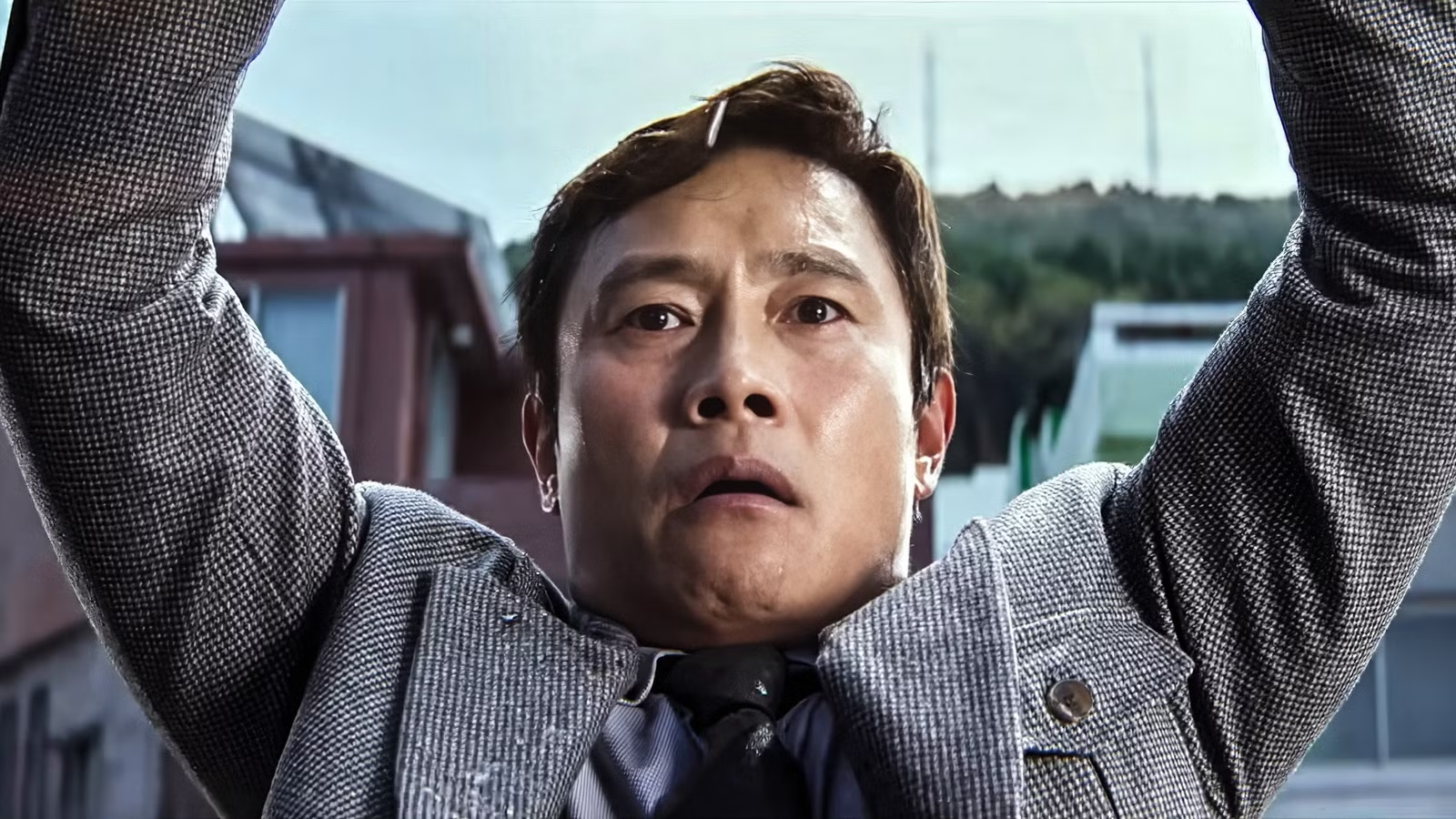
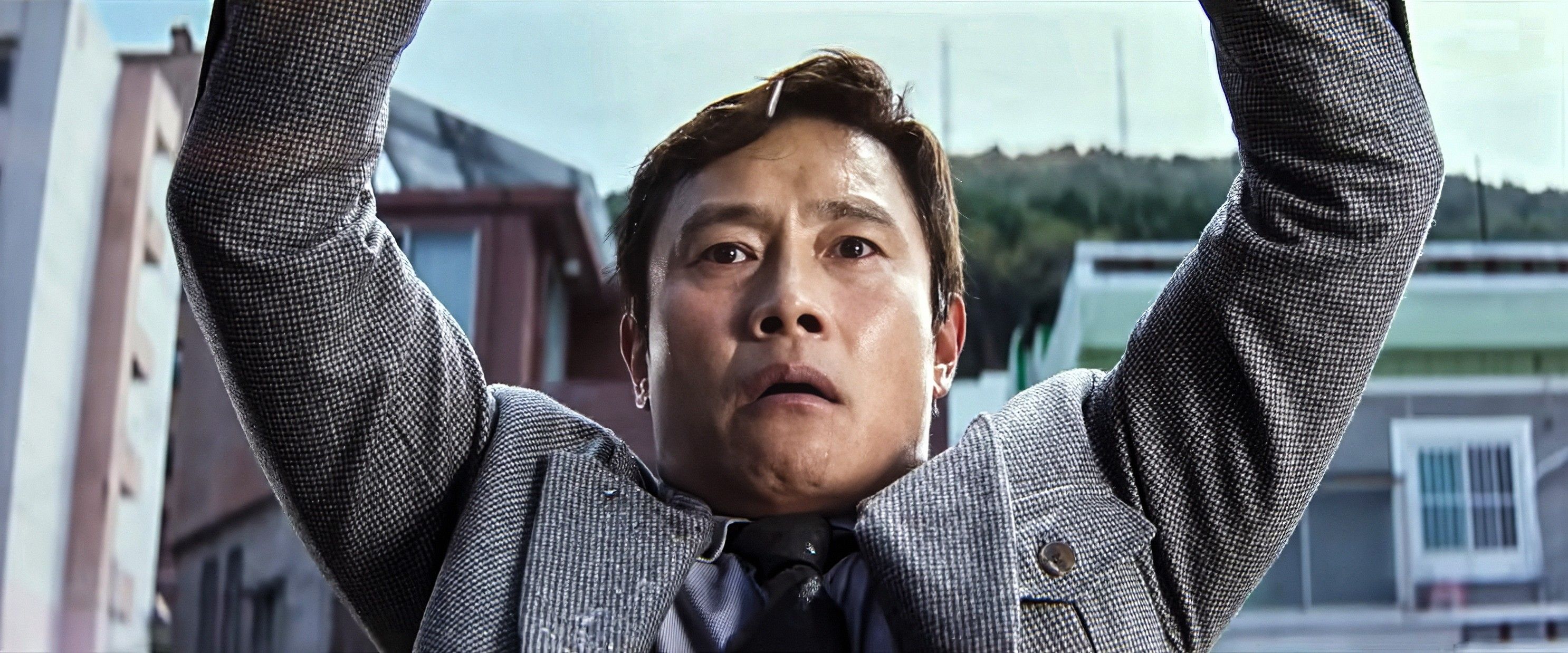
If anything, the story must have presented a different sort of challenge. When do you stop incorporating new changes to the international economy and press forward with the story? In Park’s version, Yoo Man-su (Lee Byung-hun) is an expert in the dwindling field of paper (shades of Michael Scott), cruelly laid off and panicking about his family’s finances. His wife Lee Mi-ri (Son Ye-jin) is able to get part-time work as a dental assistant, but it’s not enough to support their upper-middle-class lifestyle: two kids (one of them an autistic prodigy who would benefit from expensive cello lessons), two dogs, a large house, and all the usual amenities. (When faced with the cancellation of the family Netflix subscription, the teenage son leaves the dinner table with a familiar “Ta-dum!” as he attempts to watch through his queue before the account expires.)
Desperate to land a job at one of the few remaining paper companies, Yoo concocts an ingenious, gruesome scheme: Create a fake job advertisement for exactly the kind of job he wants, drawing candidates (and their personal information) to him. He then becomes a murderous one-man HR department, selecting the strongest competitors and targeting them for death. That way, he can kill the occupant of his ideal job and feel certain that he will be the best candidate available. Yoo is not a soulless killer by nature, but, well, see the movie’s English-language title. (The literal translation of the Korean title: “It Cannot Be Helped.”)
Similarly, Park is not necessarily a devotee of black-comic slapstick, at least not principally. His movies often have a mordant sense of humor, but his last few, like the elegant Decision to Leave and the deliriously sexy The Handmaiden, mix some understatement in with his audacious visuals. (One of the most memorable shots in The Handmaiden remains difficult to discuss in polite terms.) No Other Choice is not understated. It is ornately decorated with incidents, sometimes to a fault; the murders become such elaborate undertakings that the runtime swells well past the two-hour mark.
It’s hard to complain, though, when the filmmaker is working in top form. Yoo’s first target is a cracked-mirror version of himself: unemployed, a drunkard, and cuckolded by an unfaithful wife. (The movie later reveals that Yoo was a violent drunk in the past; he also suspects Lee of infidelity, though she is actually quite loyal to him.) The farcical complications that ensue as Yoo spies on this man, accidentally meets his wife, and eventually engages in a three-way fracas for control of a gun extend the sequence into a symphony of comedy, discomfort, and genuine suspense. It imagines a Hitchcock comedy like The Trouble with Harry or Family Plot merged with one of the director’s nailbiters like Rear Window.
The continuing escalation of Yoo’s predicament does broadly flirt with predictability. Less easy to guess, though, is how Park will use his camera along the way. In one scene, a police officer passes a character an iPad, where she swipes through images of weapons. Park fixes his camera on the iPad screen to show what she’s looking at; her face as she looks at the images; and the cops who are looking at her looking at the images in one unbroken take, without the fussiness of a long tracking shot. The movie isn’t just a technical feat, either. Lee and Son give bravura performances as a married couple who have each other’s backs but express that support in different ways. Son has a great scene where she prepares to entice a family frenemy away from pressing charges against her son — no less desperate than her husband, though far less lethal about it.
These grace notes keep the movie from the overkill that it repeatedly threatens to execute. Well, that and the fact that its resonance in an environment of perma-collapsing, AI-friendly, and worker-hostile capitalism is as immutable as the worker characters are disposable. That a viewer might guess, by halfway through, how No Other Choice might end doesn’t make it any less chilling: a portrait of self-annihilation that disguises itself as self-preservation. The real miracle is that Park makes this economic mayhem fun to watch — at least temporarily.
No Other Choice is currently streaming on Hulu.